

Federal Child Nutrition Policy & Advocacy
Children need access to nutritious food to thrive. One way we improve and expand access to nutrition assistance programs is through improvements to federal child nutrition policy and advocacy. This section covers the typical legislative and regulatory processes that govern the child nutrition programs and SNAP. For other federal policy information as well as state policy, please see the pages devoted to specific programs.
The United States Congress passes laws that create and update the federal nutrition assistance programs that connect kids and families to the food they need. These programs, like school meals, Summer EBT and SNAP, are a critical source of support to the millions of kids and families who struggle with food insecurity and high food prices.
Congress passes some laws through standalone bills that are introduced, considered in committee, voted upon, passed and signed into law by the President. However, most legislation is part of larger packages, like Child Nutrition Reauthorization or the Farm Bill. Child Nutrition Reauthorization or CNR covers the child nutrition programs, and the Farm Bill includes SNAP along with many other policies and programs. For more details on how CNR and the Farm Bill work along with updates, please see the tabs for each.
Also, in addition to passing packages like CNR, Congress must also pass appropriations bills to fund government programs. This is especially important for programs that do not have mandatory funding, like WIC. Appropriations is typically an annual process, though sometimes Congress passes temporary spending measures called continuing resolutions while continuing to debate an annual budget. Sometimes, other policies are included within spending packages. For more on how the appropriations process is supposed to work as well as what happens during a lapse in appropriations, see this explainer on the appropriations process and government shutdowns.
Once Congress passes a bill and the President signs it into law, a federal agency must provide additional details and guidance through the regulatory process. In the case of child nutrition programs and SNAP, the U.S. Department of Agriculture drafts the regulations and oversees state implementation. For more on the regulatory process and current regulations open for public comment, see the Regulatory Policy tab.
The National School Lunch Program (NSLP) was the first permanent child nutrition program, authorized in 1946. The other child nutrition programs were piloted, made permanent, and refined throughout the 1960s and 1970s, and the NSLP also underwent key changes during this time period.
Beginning in the 1980s, changes to the child nutrition programs were consolidated into one piece of legislation renewed on a regular five-year cycle: what we now know as Child Nutrition Reauthorization (CNR). This remained true for roughly 25 years and six CNRs. The last CNR was passed in 2010 and expired in 2015.
Child Nutrition Reauthorization (CNR) is a comprehensive process that updates the legislation authorizing the federal child nutrition programs, including the:
- National School Lunch Program (NSLP), including afterschool snacks
- School Breakfast Program (SBP)
- Child and Adult Care Food Program (CACFP), including afterschool snacks and meals
- Summer Food Service Program (SFSP) and NSLP Seamless Summer Option (SSO)
- Fresh Fruit and Vegetable Program (FFVP)
- Special Milk Program (SMP)
- Special Supplemental Nutrition Program for Women, Infants, and Children (WIC), including the WIC Farmers' Market Nutrition Program
Most programs included in CNR are permanently authorized and considered mandatory spending, meaning that the programs do not lapse or lose funding, even if Congress lets CNR expire, though CNR does provide an opportunity to update the programs' funding formulas. Some programs, namely WIC, are permanently authorized but do not have permanent funding authorization, so they rely on an annual appropriation.
The CNR process also typically includes grants and smaller programs or pilots that are not permanently authorized, such as equipment grants, Farm to School initiatives, and nutrition education. These require both authorization and appropriations once CNR expires.
CNR also dictates the administrative funding formulas for the state agencies that administer the child nutrition programs.
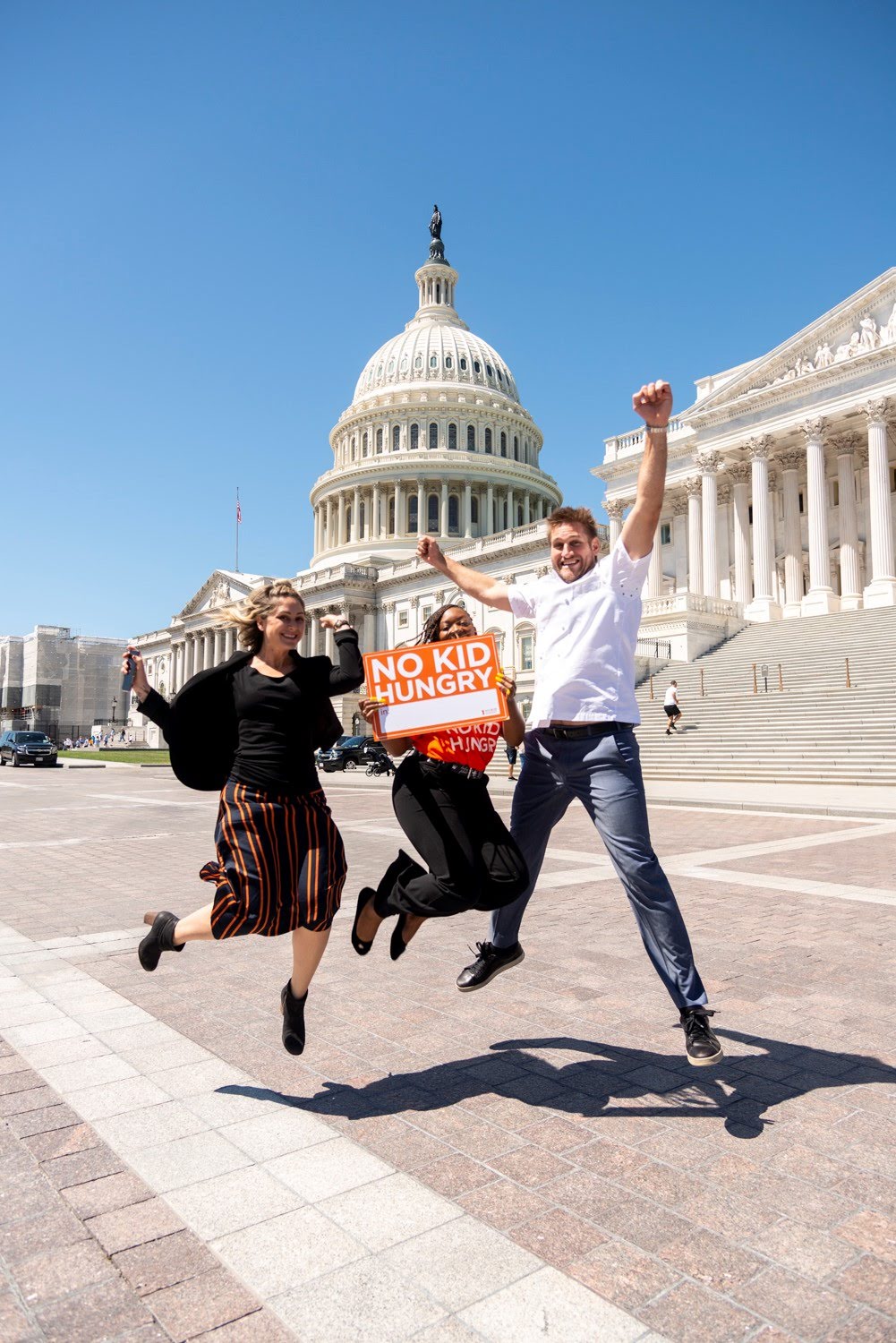
Committees of Jurisdiction for CNR
House of Representatives: Committee on Education & the Workforce
Senate: Committee on Agriculture, Nutrition, and Forestry
The CNR process typically begins well in advance of its scheduled expiration with public committee hearings. These hearings include witnesses representing a variety of stakeholder groups, including school nutrition professionals, summer program operators, WIC administrators and more. The witnesses provide testimony and committee members ask questions to call attention to current challenges and opportunities across the child nutrition programs.
At the same time, members of Congress may introduce what are known as "marker bills" or individual pieces of legislation addressing a specific issue or issues within one child nutrition program. These marker bills are not expected to pass into law on their own but instead highlight a potential solution that could become part of a CNR package. Members do not have to be part of the committee of jurisdiction to introduce a marker bill.
Eventually, one or both committees of jurisdiction introduce, amend and then pass a comprehensive CNR bill. Once out of committee, the full Senate and House chambers must pass the bill. If each chamber has been considering and then passes its own legislation, then a conference committee must reconcile the Senate and House versions. The Senate and House must vote again on the final conference package. If one chamber begins the process, then the other chamber's committee of jurisdiction may take up the already-passed legislation and either amend it or pass it as-is. If the other chamber passes an amended bill, then the initial chamber must vote again to accept the amended version.
Once passed by both the House and Sentate, the bill goes on to be signed by the President and become law. From there, the U.S. Department of Agriculture begins the process of regulation writing and implementation.
Although CNR marker bills and other child nutrition-related legislation continue to be introduced in Congress, there is no effort currently underway to pass a comprehensive CNR package.
During the 117th session of Congress, the Healthy Meals, Healthy Kids Act was introduced in the House of Representatives on July 20, 2022. The House Education and Labor Committee, which has jurisdiction over the CNR process in the House of Representatives, passed it out of committee. This is comprehensive legislation that covers all of the child nutrition programs and incorporates ideas from numerous marker bills introduced over the past several years. For more details, review our summary and see our official statement. Unfortunately, this bill was never passed by the full House, and the Senate did not take up any CNR legislation of its own.
While a comprehensive CNR was not possible before the end of the 117th Congress, legislators did address some child nutrition program priorities through the appropriations process. The Consolidated Appropriations Act of 2023, which was signed into law on December 29, 2022, authorized a permanent non-congregate summer meals option and a permanent, nationwide Summer EBT program. For more details on this and other provisions, see our summary and official statement.
The Agricultural Adjustment Act of 1933, part of The New Deal, was the first "Farm Bill." Since the Agriculture and Consumer Protection Act of 1973, the Farm Bill has also included nutrition assistance programs. The Farm Bill now also authorizes programs like incentives for healthy food purchasing and commodity food assistance.
The various programs and policies included in the Farm Bill are organized into sections called "titles." There were 12 titles in the most recent Farm Bill, including conservation, crop insurance, rural development and forestry. Nutrition assistance programs including SNAP are covered in Title IV.
The Food Stamp Program (now known as SNAP) was established in 1939 and ran until 1943. It was piloted again in 1961 and made permanent by the Food Stamp Act of 1964. By 1974, states were required to make the program available in every jurisdiction, effectively making it nationwide, though states themselves are still not required to participate.
The 2008 reauthorization of the Farm Bill rebranded the Food Stamp Program as the Supplemental Nutrition Assistance Program or SNAP.
Congress reauthorizes the Farm Bill about every five years. SNAP is a permanently authorized entitlement program, meaning that it continues without the need for future Congressional action and will automatically serve all eligible participants without Congress needing to authorize additional funding. However, many other programs authorized by the Farm Bill would lapse if it was not reauthorized in a timely manner. This also provides an opportunity to make policy changes to expand and improve SNAP.
The Senate Committee on Agriculture, Nutrition, and Forestry and the House Agriculture Committee each oversee the drafting of the Farm Bill. Each committee starts the process with hearings to learn from stakeholders about the current challenges and needs that must be addressed by the Farm Bill. Members of Congress introduce individual "marker bills" addressing specific issues with the understanding that these marker bills will not be considered separately but instead get integrated into each committee's overall Farm Bill package. Once the committee drafts and passes the Farm Bill, the full Senate and House must vote to approve the package. After separate Senate and House versions are reconciled as needed and receive final approval, the President signs the Farm Bill into law.
The Agriculture Improvement Act of 2018 is the name of the latest Farm Bill reauthorization, and it expired on September 30, 2023. There have been three short-term Continuing Resolutions that have extended the current Farm Bill, and it is now set to expire on September 30, 2026.
In May 2024, the House Agriculture Committee passed the Farm, Food, and National Security Act of 2024 (HR 8467) a Republican-authored Farm Bill, along party lines, 32-21. This bill did not move in the Senate.
Some programs typically included in the Farm Bill were included in H.R.1, the budget reconciliation bill that was signed into law on July 4, 2025. H.R.1 also made the largest cut to SNAP in the program's history.
In February 2025, the House Agriculture Committee released proposed text for a Farm Bill, again called the the Farm, Food, and National Security Act. A markup is scheduled for February 23, 2025. See Share Our Strength's statement on this proposal.
Regardless of the status of the Farm Bill, SNAP continues to operate since it is a permanently authorized entitlement program.
To address the harms of the cuts to SNAP made by H.R.1, the next Farm Bill or farm relief package must:
Delay or Reverse State Cost Shifts
Restore Eligibility and Reject Further Cuts to Benefits
Preserve the Intent of SNAP
Enhance SNAP Security
Improve Program Efficiency
Uphold Program Integrity
After Congress passes a law or updates the laws for an existing program, additional information is typically needed for organizations or other entities to comply with the new law. Sometimes a law may specifically direct a federal agency to provide more details.
The federal agency tasked with administering and overseeing implementation of a law goes about providing this additional information through the regulatory process.
To issue regulations, the agency first drafts a proposed rule. The proposed rule is published in the Federal Register, and the public has the opportunity to submit comments on it. Sometimes the agency asks the public to answer specific questions about the proposal as part of the comment process, but comments can address any part of the proposed rule.
Once the public comment period ends, the agency must review and consider all comments received. The agency may make changes to the final regulations based on the feedback. The agency must also respond to the comments received when posting the final regulations in the Federal Register and provide a rationale for its decision. Regulations are not finalized through a majority-rules voting process. Agencies give more consideration to commenters with experience or expertise in the topic who give concrete suggestions with reasoning. Form or template comment letters, while considered, carry less weight with regulators. For support in writing and submitting a comment, view our resource How to Comment on Federal Regulations.
The final rule published in the Federal Register will include an effective date. It may take effect immediately, or the agency may choose to set a later effective date to allow time for training or other changes necessary for compliance.
The agency may issue additional guidance through memoranda or other training materials to provide additional detail or clarificatoin on the regulations.
- On May 21, USDA issued a proposed rule, Serious Deficiency Process in the Child and Adult Care Food Program and Summer Food Service Program. The proposed rule is open for public comment until May 21, 2024. No provisions of the rule will be implemented until a final rule is issued and takes effect. For more information on what the proposed rule would do, see the USDA explanation.
For a list of all recent rules published in the Federal Register by the USDA Food and Nutrition Service, including final rules as well as proposed rules open for comment, see: https://www.federalregister.gov/agencies/food-and-nutrition-service.
In December 2022, the Consolidated Appropriations Act of 2023 authorized a permanent option for non-congregate summer meals in rural areas without congregate service and also authorized permanent, nationwide Summer EBT. As required by law, on December 29, 2023, USDA issued its Interim Final Rule (IFR): Establishing the Summer EBT Program and Rural Non-Congregate Option in the Summer Meal Programs. The IFR takes immediate effect and will guide implementation in Summer 2024, but the IFR is still open for public comment until April 29, 2024 to inform a future final rule.
On September 26, 2023, USDA issued a final rule to lower the eligibility threshold for the Community Eligibility Provision (CEP) from an Identified Student Percentage (ISP) of 40% to 25%, finalizing a proposal issued in March 2023. The new threshold (with corresponding changes to the notification/publication and grace year rules) takes effect on October 26, 2023, though the deadline to elect CEP for the 2023-2024 school year has already passed unless a state requests a waiver.
On August 23, 2023, USDA issued the Child Nutrition Program Integrity Final Rule. This final rulemaking includes provisions related to three separate proposals and affects the school meal programs, CACFP, and SFSP. For details, please review our summary.
On July 7, 2023, USDA released the 2023-2024 meal reimbursement rates for the National School Lunch and School Breakfast Programs as well as the Child and Adult Care Food Program.
On September 19, 2022, USDA issued a final rule, Streamlining Program Requirements and Improving Integrity in the Summer Food Service Program, and on December 27, 2022, USDA issued technical corrections to the final rule. For clarity, only the final corrected version is linked here.
The No Kid Hungry 2023 Federal Briefing Book is available for all 50 states. It will introduce the impact of the No Kid Hungry campaign in your state, the challenge of child food insecurity, and the programs and policies that can improve access to food and nutrition in communities.
- Alabama
- Alaska
- Arizona
- Arkansas
- California
- Colorado
- Connecticut
- Delaware
- Florida
- Georgia
- Hawaii
- Idaho
- Illinois
- Indiana
- Iowa
- Kansas
- Kentucky
- Louisiana
- Maine
- Maryland
- Massachusetts
- Michigan
- Minnesota
- Mississippi
- Missouri
- Montana
- Nebraska
- Nevada
- New Hampshire
- New Jersey
- New Mexico
- New York
- North Carolina
- North Dakota
- Ohio
- Oklahoma
- Oregon
- Pennsylvania
- Rhode Island
- South Carolina
- South Dakota
- Tennessee
- Texas
- Utah
- Vermont
- Virginia
- Washington
- West Virginia
- Wisconsin
- Wyoming